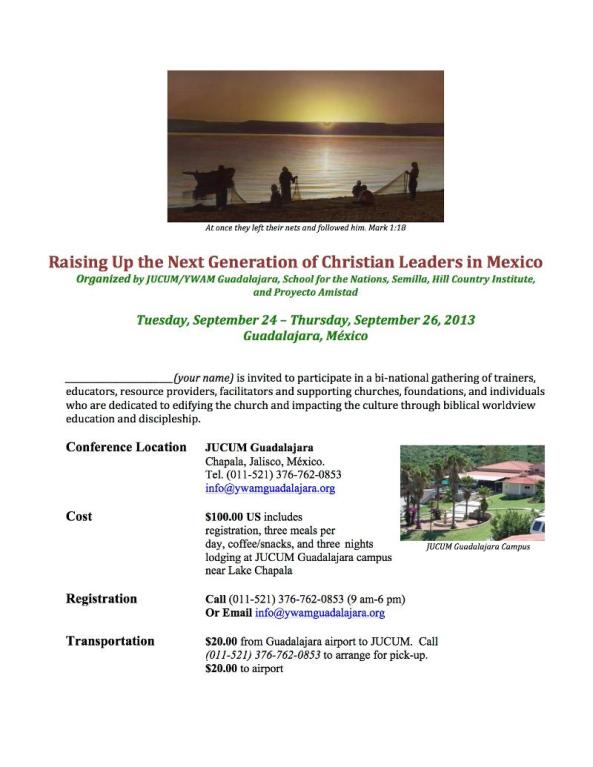
Training opportunity: AMO children’s program, June 3-7 in Texas
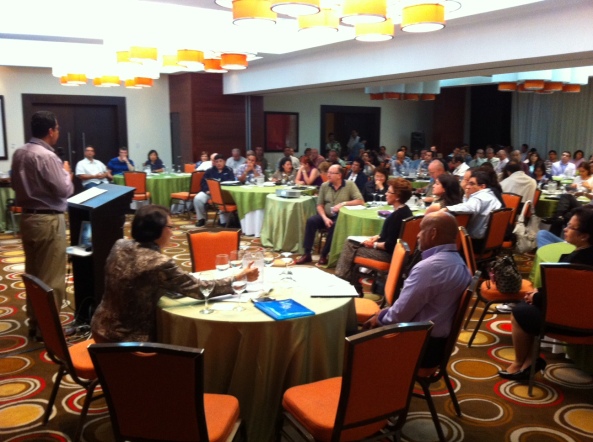
The AMO Program is a powerful, comprehensive curriculum raising up servant leaders all across the globe. The DNA was influential in its beginnings, and it presently is used in summer schools, home schools, Sunday schools, after-school programs, youth reformatories, orphanages, young-adult Bible studies and other venues.
If you or anyone you know has interest in a children’s curriculum designed by biblical principles, please consider attending this five-day workshop in Texas next month! The cost is only $80 per person.
Possessing the kingdom of God: A live presentation by DNA leader Hein van Wyk
The kingdom of God is a mysterious but central aspect of the Christian faith.
Out of the 40 parables Jesus taught to his disciples and to others within earshot, 18 specifically were about the kingdom. In the four gospels, the phrases kingdom of heaven or kingdom of God are referenced 97 times!
Hein van Wyk, part of DNA’s Global Leadership Team and an excellent teacher, gave perhaps the most thorough explanation that we have seen of the kingdom of God at the 2013 DNA Global Forum in Brazil. Here, you’ll find his presentation in two parts. Please watch and share with your friends and colleagues!
Possessing the Kingdom (Part 1) by Hein van Wyk from Disciple Nations Alliance.
Possessing the Kingdom (Part 2) by Hein van Wyk from Disciple Nations Alliance.
About Hein van Wyk
Hein van Wyk’s passion is Christ and the establishment of His Kingdom in every area of life. For the last 17 years, he has facilitated Kingdom development as it relates to leadership formation, collaboration initiatives, community upliftment, mission mobilization and strategic planning. He has been a conference and motivational speaker on topics that include worldview, transformational development, missions, prayer and partnership. Hein resides in South Africa and ministers nationally as well as internationally. In addition to serving on the DNA’s Global Leadership Team, he works from the platform of Hope for Africa Strategic Alliances and serves as Samaritan Strategy Africa‘s regional coordinator for southern Africa, as well as Africa director for both Churches Together and Experience Mission. Hein is married to Helene and has three children: Jannandi (24), Heilene (20) and Daneiko (13). Contact Hein at hein@hopeforafrica.co.za.The power of listening in a poor rich country
Most people wouldn’t list Japan as a poor country. Indeed, the income per capita is almost $45,000 USD, compared to just $4,940 for China or $820 for Cambodia (World Bank).
But what if a nation’s wealth was measured not just by money, but also by its strength of human relationships, its people’s connections to the Living God, the hopeful visions encapsulated by its youth? In that case, Japan might be considered desperate–along with many other “rich” countries in our world.
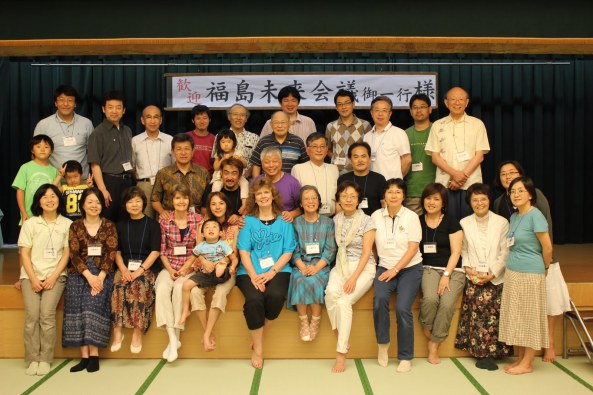
Shun Jinnai helped found Friends with the Voiceless, the Japanese arm of the DNA.

Shun says Japan has the highest rate of suicide among any of the world’s developed countries: more than 30,000 people kill themselves each year (the actual number is rumored to be double, but family members often claim such a death was an accident or disease, to avoid the shame). About 85 percent of young people say they can’t find meaning in their lives, and only 0.3 percent of the country’s 120 million residents have a relationship with Christ.
“This is a result of the story that Japanese people have been following,” says Shun. “The story is about economic sufficiency and individualism.”
“That story turned out not to be trustworthy, all of a sudden,” he says of March and April 2011, when the country suffered its most powerful recorded earthquake followed by a ferocious tsunami and the worst nuclear disaster since Chernobyl.

The cost was enormous: more than 18,000 human lives and about $235 billion.
“So, people of Japan are in a big question now,” he says. “They are asking, how should we live now? Because we lost our story.” He says what Japanese people need is “restoration of relationship … serving each other, like Jesus did, and the image of family that the Bible tells us.”
Since 2004, Shun has employed local resources and bold creativity to reach Japanese who are lonely or lost. That year, he heard a DNA speaker and “was so touched by the concept that a church should care for the most broken in society,” he says.
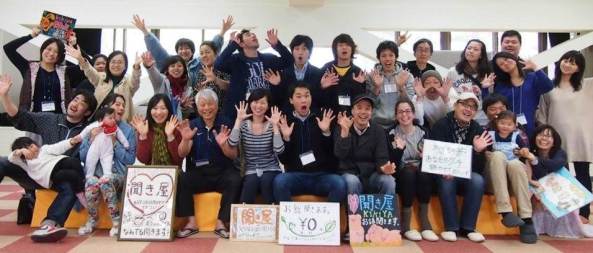
He gathered a few friends and looked for trash to pick up–anything to bring God’s beauty, goodness and truth to his community. After one month, the small group was ready to go deeper. They came back to the train station with a sign: “We will listen to you for free.”

Shun and his friends had three ‘rooms’ called Do Not Judge, Do Not Teach, and Keep Confidentiality. They did this every Monday and Friday night, after work, for two years, sometimes lingering in conversation with strangers until 1 a.m.
They listened to people’s struggles with anxiety or anger; often, teens would arrive wanting to discuss their parents’ divorce and broken families. Some visitors would ask why Shun and his friends were doing this, which opened the door for sharing their own stories of the freedom they found in Christ.
Many of those visits led to people trusting Christ as their hope and savior, then being baptized, and the ministry grew.

Word got out to other young Christian leaders and, now, this Kikiya ministry (“kiki” means listening, and “ya” means bar/restaurant) has volunteers in 20 regions of Japan.

One group alone has 30 Kikiya volunteers! Shun says that since 2004, more than 100 Japanese have come to the Lord each year through this simple-but-powerful ministry.
Shun’s story is an example of a Seed Project: a small-scale, wholistic outreach done by a small group of people to demonstrate God’s love in practical ways. Sometimes, as in Shun’s case, God grows those small seeds into ministries that bear abundant fruit!

To contact Shun, e-mail shun@karashi.net.
Why the church acting as an organization will never transform society
Just as Jesus admonished the religious leaders of his day by calling out their legalism and hypocrisy, so today we have prophetic men and women who challenge the painful truth that, in many cases, the nation has discipled the church–we Christians have put on the clothes of our surrounding culture, sometimes no longer even resembling the radiant Bride of Christ.
Is it too late? How can we return to the original call God gave his Church? How can we tell when a local church has lost its identity?
Luis Sena is the contact person for the DNA local network in the Dominican Republic. He has decades of experience in wholistic community development and presently coordinates the School Development Program (Esperanza-Edify Program) at Esperanza International.
His 15-minute speech from the 2013 DNA Global Forum in Brazil will make you cringe, but in a good way. After you watch the video (it is in English and Portuguese), please share your comments on the blog. You may also wish to follow along with the written transcript or simply listen to the audio file.
Excerpt: “…in general, the church in our generation has adopted the form, the model of the ‘corporation’ from the western culture. As a consequence, instead of discipling their members, in most cases, churches have Christianized cultural practices like advertising and marketing. They have done this in order to be friendlier to the public and to have a wider impact in their city as religious organizations, but not as the people of God.”
New book! Recovering Our Mission: Making the Invisible Kingdom Visible
Hot off the press! This week, the DNA releases Darrow Miller’s newest book called Recovering Our Mission: Making the Invisible Kingdom Visible. This 136-page book is geared at anyone interested in God’s Great Commission.
Here’s a synopsis:
Jesus commanded his followers to make disciples of all nations. This Great Commission is central to the existence of the church in every generation. Why? Because if the church does not live out the Word of God in the world, the ideas that dominate our societies will govern it. We must leave behind the incomplete vision of “saving souls for heaven” and take up the commission of discipling individuals and communities toward a reflection of the truth, goodness and beauty of God’s kingdom.
There is no neutrality: Either the church will disciple the nation or the nation will disciple the church.
In this important work adapted from Emancipating the World, Darrow Miller challenges us to rethink and restore the church’s mission amid today’s greatest challenges. We are to overwhelm the nations with the nature and character of God, anticipating the consummation of Christ’s reign, when all nations will bring the glories of their cultures into his kingdom. We are to battle tyranny with love and service, and we are to combat lies with truth and goodness. In these ways, we can recover our truly great mission to the world.
Core truths from Colombia: Pastor Pardo teaches us about the kingdom
“For years, I understood the kingdom of God as one of the topics of the Bible. But as time went by, I understood how wrong I was,” says Pastor Hector Pardo, who has been in Christian ministry for more than 50 years.
At the 2013 DNA Global Forum, Pastor Pardo spoke mightily about his understanding of God’s kingdom as the subject of the whole Bible. Click here to read the transcript and here to watch the video.

“Often when I talk with other pastors, I say, ‘Jesus never spoke about salvation or the gospel of salvation.’ I encourage them to show me one text in the Bible where Jesus spoke about the gospel of salvation. Of course, they can’t. So I ask, ‘What was the gospel that Jesus preached?’ Eventually, they realize the answer: ‘Jesus preached the gospel of the kingdom of God.’”
His powerful message plainly reflects two of the DNA’s Seven Core Truths:
- Jesus is King. There is one God, eternally existent in three Persons: Father, Son, and Holy Spirit (Deut. 6:4; Luke 3:21-22). Jesus Christ, the Son of God, is the King of Kings and Lord of Lords (Dan. 7:13-14; Eph. 1:20-22; Phil. 2:9-11; Rev. 19:16). We proclaim with the prophet Isaiah: “Of the increase of His government and peace there will be no end” (Isaiah 9:7).
- His primary agenda is to advance the kingdom of God. Christ’s purpose is to establish and advance His Kingdom “on earth as it is in heaven” (Gen. 12:1-3; Matt. 6:9-10; Matt. 6:33; Matt. 9:35; Luke 4:43; Gal. 3:8). This Kingdom comes as a worldwide reality and exists wherever the Lordship of Jesus is acknowledged in repentance, faith, and obedience to His revealed will (Isaiah 9:6-7). The Kingdom is a present reality. It offers present hope for substantial healing and restoration, though its fullness is yet to come (Matt. 13:33; Luke 11:20; Luke 16:16; Luke 22:15-26; Rev. 11:15; Rev. 21:1-2, 23-26).
- Click here to read the rest of our Core Truths.
Watch the presentation in English and Spanish:
Visit our new Cry Freedom website
Free, just and thriving nations are like fruitful trees. To flourish, they require the right conditions and the right soil.
What are the conditions that give rise to such a nation? What are the foundational principles upon which such nations are built?
This is what we must understand, for upon it depends the future of our nations, our families, and our very lives.
Last year, the DNA released a set of 10 Arabic-language videos that present biblical principles for nation building. The series was called “Cry Freedom.”
For several months in 2012, these videos were shown across the Middle East by a prominent Arabic TV station with more than 45 million active viewers each month. At one point, the videos were being used as fillers between television programs, airing three times a day!
Now, these videos are easily accessible to the whole world on www.cryfreedomnow.com. Please have a look and share this link with your friends.
We also have developed a training workshop in conjunction with these principles. Please e-mail info@disciplenations.org to request a copy of the PowerPoint presentations, Trainer’s Manual and Participant Handouts.
Vision Conference coming up in South Sudan, May 2013. Join us!
All are invited to a DNA Vision Conference to be held in Rumbek, South Sudan at the end of May. These conferences have a history of sparking life-changing vision, new ideas and partnerships. Please join us and pass this on to anyone who might be interested!
Contact Karobia Njogu (karobia.njogu@cms-africa.org)
with any questions.
Vision Conference in Burundi Sparks Church-Led Community Development
What tangible impact can words of truth have on a broken society? As the recent DNA Vision Conference in Rutana, Burundi showed, the words of Scripture can begin to bring about community transformation.
In Burundi, about 65 percent of the population lives in poverty, and the life expectancy is only 54 years of age. Despite these unfavorable circumstances, the land is fertile and with over 60 percent of the people living in the rural areas, there is great potential for community development.
Christian organizations like the Disciple Nations Alliance and Harvest Foundation have organized Vision Conferences in Burundi to begin healing the brokenness. Through these conferences, indigenous trainers use the teachings of the Bible to train local pastors in wholistic transformation.
In 2005, the General Chaplain of the Burundi Police, Canon Onesime Nimbeshaho, attended his first DNA Vision Conference. Since then, his heart for wholistic ministry has led him to be involved in several training events and to head up the recent Vision Conference in Rutana. Forty-one participants attended this conference and, afterward, many said it was the most beneficial conference they had ever been to because it gave them practical, hands-on advice on how to bring healing to their nation.

“Other seminars give us theoretical knowledge, but this Vision Conference has touched theoretical and practical issues to help us to solve problems in our communities,” said Pastor Pontien Ribakare of the Anglican Church.
The Vision Conference encouraged the participants to put the teaching into action by doing Seed Projects in their local villages. A Seed Project is a small, church-initiated outreach that allows Christians to identify needs in their communities and practically help meet those needs using their own resources. The goal is for Seed Projects to become ongoing initiatives working to bring wholistic restoration.
Because of this conference, local Christians planned 11 new Seed Projects, including:
- Supporting orphans
- Visiting 200 prisoners and providing them with food, clothes, soap and shoes
- Visiting the sick in hospitals
- Feeding malnourished kids
- Cultivating lands for poor and elderly people
- Purchasing utensils for the elderly
- Building toilets for the elderly

As these Christians begin to practically show Christ’s love to their communities, pray for the restoration of the province of Rutana.
Pray that the Church would begin to make positive impacts in every area of society. Finally, the Pastors of Rutana are virtually illiterate when it comes to understanding the Bible, so pray that God would raise up more educated people to train the pastors and further this ministry.